
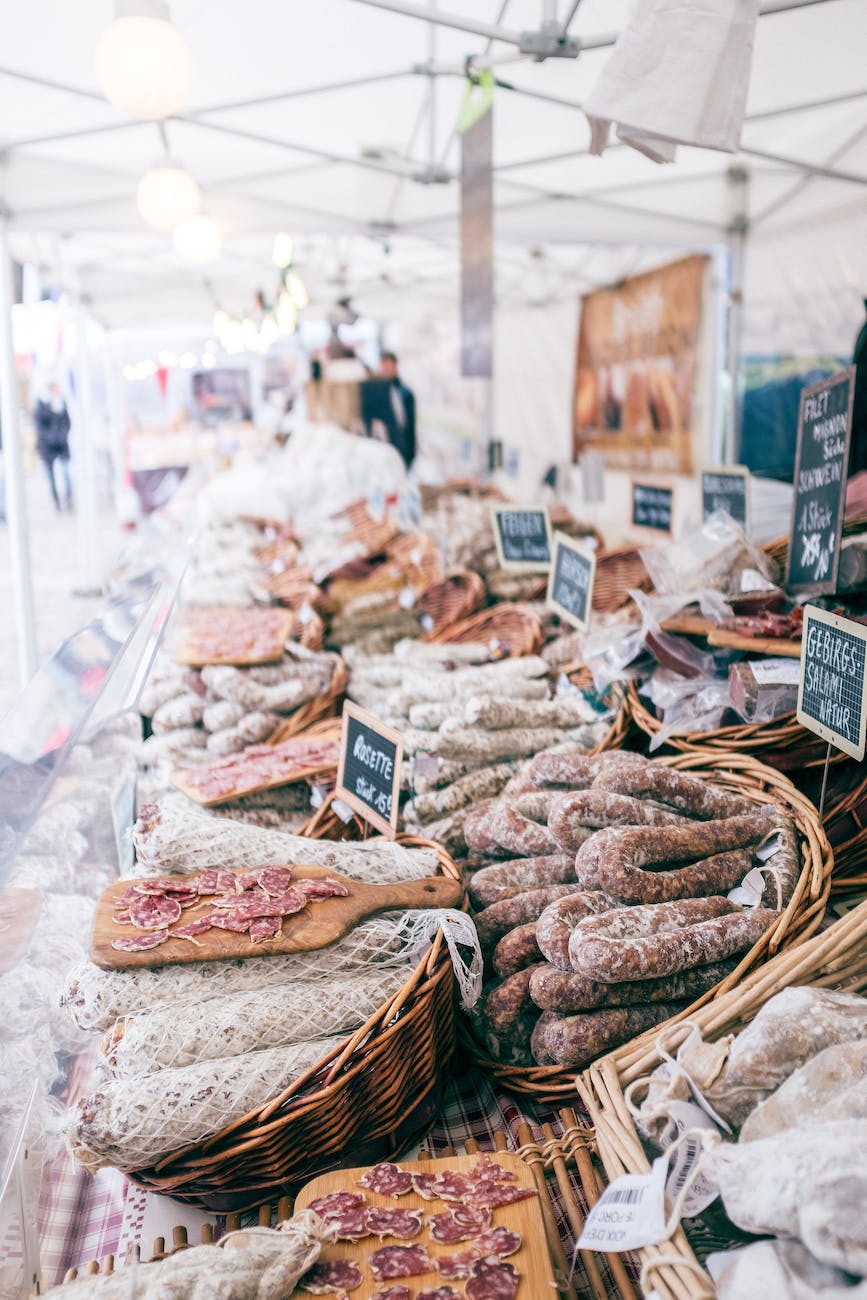
Bonjour! I thought I would take the final three weeks of March to dive into one of my favorite past times–shopping. Specifically, what it is like to shop in France. I will do my best to paint a realistic, and hopefully interesting, picture of what it is like to shop here, specifically as I have experienced it.
First on shopping itself, I’ve actually had to do a lot of unpacking over the last year when it comes to my long-standing love for it. It has, in the past, served as retail therapy. On especially hard days at work, I would use my lunch hour to run to a store and look at shoes, do a TJMaxx or HomeGoods run, or on really tough days on my ferry ride home, scroll through way too many online shopping sites–clicking and buying. In the past, I was fortunate that our incomes allowed me to support that habit (usually). Two things have really changed that–our income is now MUCH different, and I realize after cleaning out an entire house and selling and giving everything away, it really is just stuff. My days of mindlessly buying things to make me feel better are thankfully over. I am learning a healthier way of approaching shopping–learning to buy what I need and determining that I really, really love something before I buy anything else.
Shopping in France–what is that like? We’ll start with the fact that shopping or buying things in any country requires a level of interaction with people; it requires to an extent knowing some of the language, both to know what you are buying and how to communicate what you want/need. This made my first shopping experiences in France, whether at the grocery store or the market, very nerve wracking for me as someone still learning French. How would I tell the person at the market selling amazing pasta that I need enough for two persons–how many kilograms is that anyway? (Thank you US public education for not teaching me anything about the metric system) How would I know how to ask for a receipt? What is that even called in France? So, I’ll walk you through what I have learned about shopping and we’ll start with food shopping–which is pretty essential (yes, even more than clothes or shoes). Be sure to see my pictures below and for reference, as of today, one euro is equal to $1.06 US.
Our village is fortunate to have four grocery stores, which is a lot for this area of France. We have an Aldi and Lidl, which many of you are familiar with–those happen to be the two grocery stores I have not yet visited. We have Intermarche (a mid-size grocery store–think Safeway or Food Lion) and E. Leclerc (think Walmart or Target Superstore). Although Intermarche is only a mile away, Darrell and I tend go to E. Leclerc about 2 miles from our house due to the broader selection. At our particular branch of E. Leclerc, there is also a McDonalds, a brasserie, a couple of clothing stores, drugstore, cosmetic store, and hair salon–it’s quite something. We also go to our Friday market here in town and buy local items. I’ll focus on my grocery store shopping though.
First, everyone brings their own bags to the grocery store in France, or they don’t bring bags at all and pile all the groceries back into the cart after buying them (seems incredibly inefficient to me.) You also must have a 50 cent or euro coin to deposit into the cart in the cart corral–once you return the cart, you get your deposit back. (There are no carts left in parking lots–genius!) In our store, all the sale items for the week are stacked right next to the entrance–everything from cleaning supplies to food to alcohol. This means that every week, someone has to collect all those items from all over the store and move them to the front of the store and then put them back again at the end of the week. I’m not sure this is the most efficient method, but I always know what is on sale. One other thing, all foods in France with packaging have a grade on them–A to E–identifying the overall nutritional value of what you are eating. Portions within the packages are generally smaller than the US as well. You can get a grade “E” grade bag of chips, but it will only be 25% the size of US packaging.
Shopping for Meat
France has many, many types of meat in their stores. Beyond the types most of us are familiar with like beef, chicken, lamb, and pork, there is rabbit, tripe, cow tongue, among others. Bacon itself, as I am used to it, is hard to find but I can easily find pork belly, which is actually quite amazing. There is an entire aisle just for jambon (ham) and the seafood counter at our store is huge and always busy–mussels, oysters, whole fish, and crevettes (shrimp) with the heads on. In addition, there is a butcher counter where there is always someone on hand ready to slice your steak or pork fresh.
Shopping for Dairy and Eggs
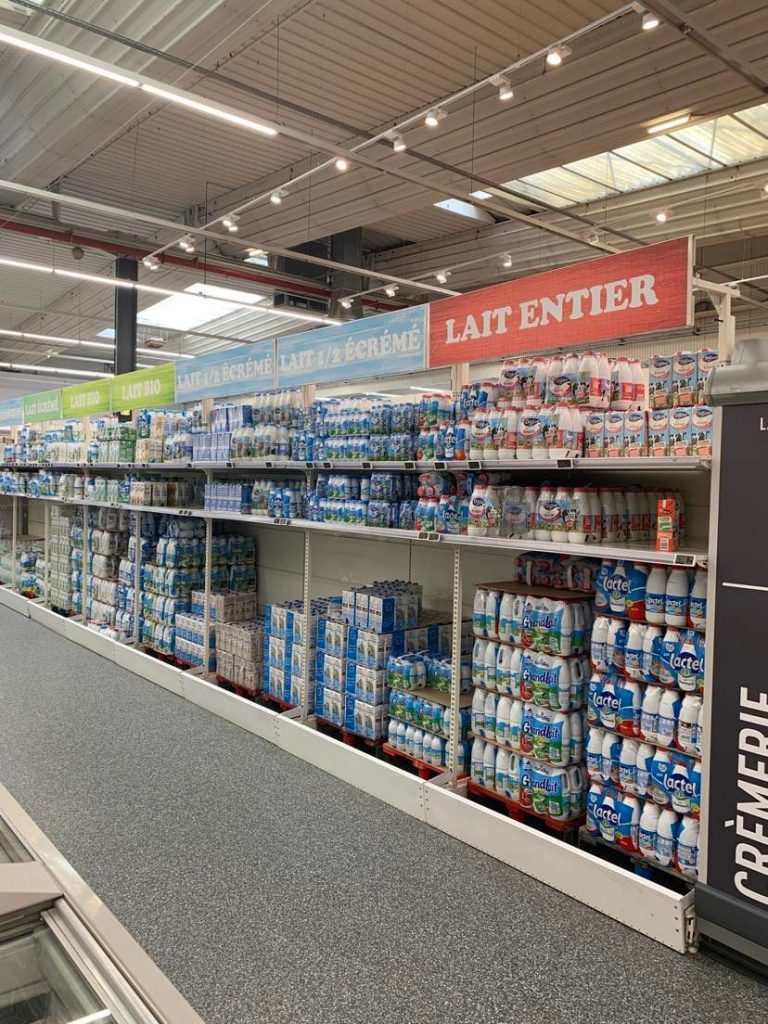
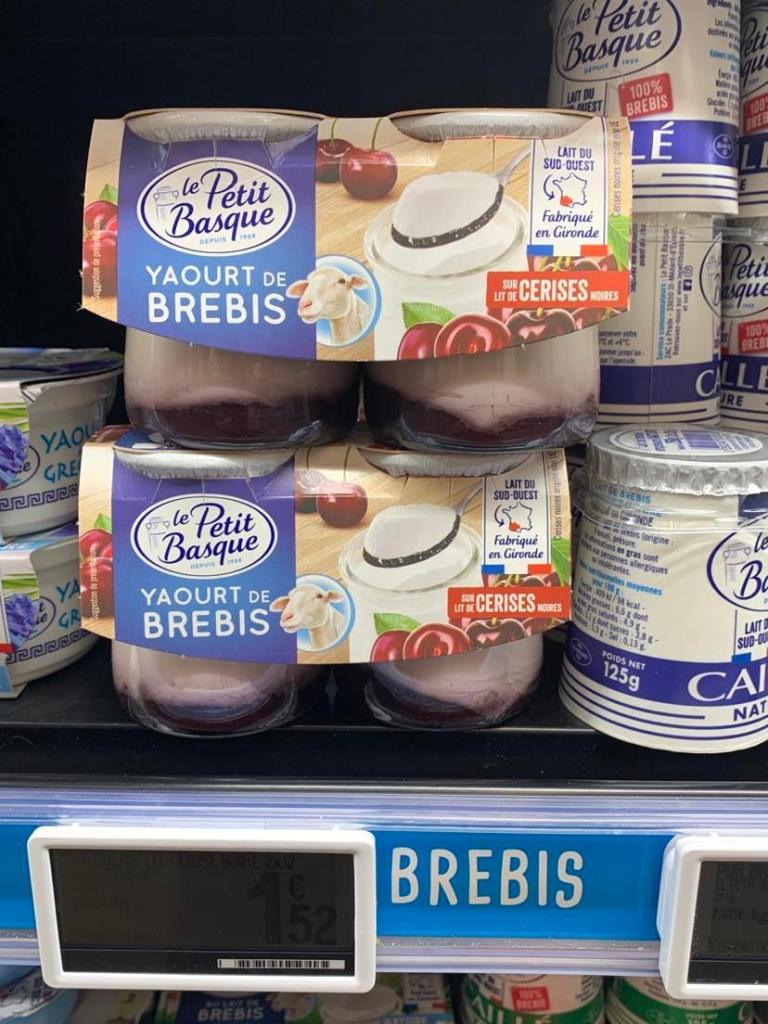
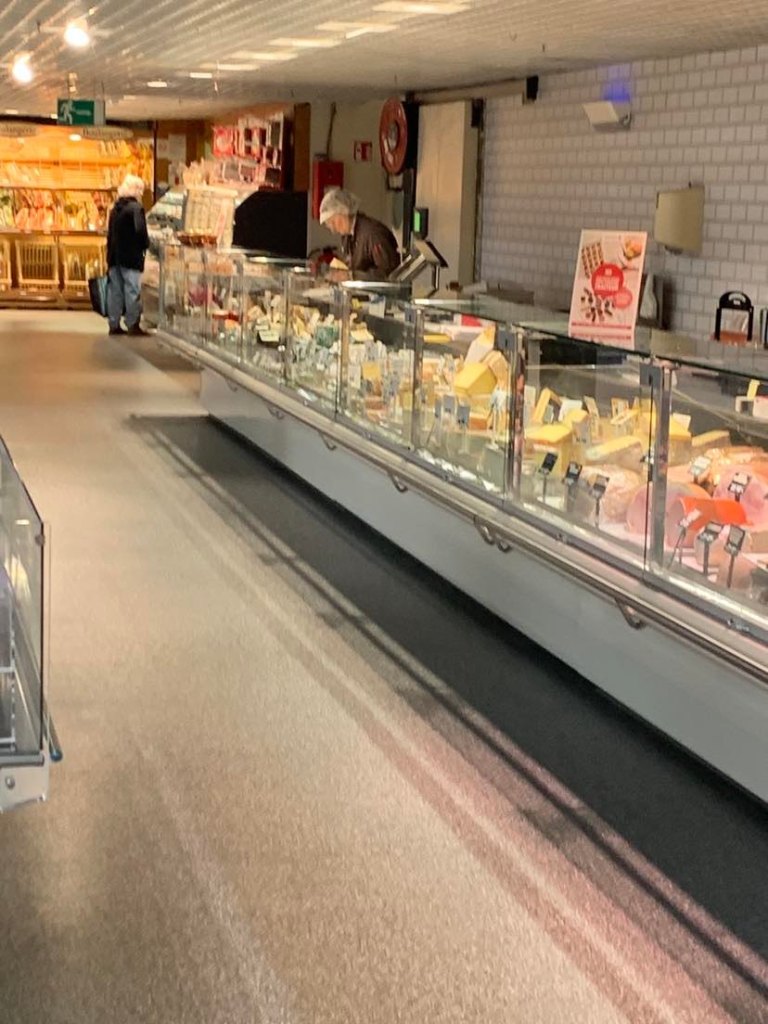
A big learning when we came to France is how the stores sells eggs and milk–none of it is refrigerated, and it is also extremely affordable. Darrell and I bought a dozen eggs today for just over 2 euros. We do refrigerate our eggs, but we don’t refrigerate our milk until we open it. I think I was most surprised by what a big deal yogurt is here. There are literally two huge aisles full of yogurt, and they are absolutely amazing! Think of rich creamy goodness in little glass jars–my favorite has cherries at the bottom and I get two yogurts for 1.50euros. My other absolute love is the butter–there is nothing like it–it is rich, creamy, and I want to put it on and in everything I eat. It is also so affordable at 2.44 euros for a big block. Ok…and then there is the cheese… the cheese counter alone takes about half of the back of the store–every kind you can imagine. Cheese in France is not so much about using it as an ingredient for a dish (although that it is done), it is its own course and is respected as such. Selecting the perfect combination of cheeses is an art form and is the space I have felt the most inept. However, I am learning how to order it, how to store it, and how to serve it.


Shopping for Produce
In France, produce is provided based on what is local to the region, to include Spain and Portugal. We can find much of what we find in the US, but there are a few items that are much more plentiful here: shallots, endives, mushrooms, and leeks (they are absolutely HUGE!) Everything is very fresh and has to be eaten within a few days–meaning they don’t pick it until it is ripe.

Shopping for Condiments and other foods
You can always tell a lot about a culture by what types of foods they have a lot of–mustards and mayonnaise are one of those for the French. There are so many varieties, but my absolute favorite is the Dijon Mustard coming straight from Dijon–it is tart with a horseradish bite that makes your nostrils burn (back where they meet your brain). It is so amazing with pate’ or to use in a French vinaigrette (which I have given you the recipe for below–I never buy store bought salad dressing). I also love to buy cornichons (the little tart pickles) and the mayo here is also amazing (especially with frites or fries).
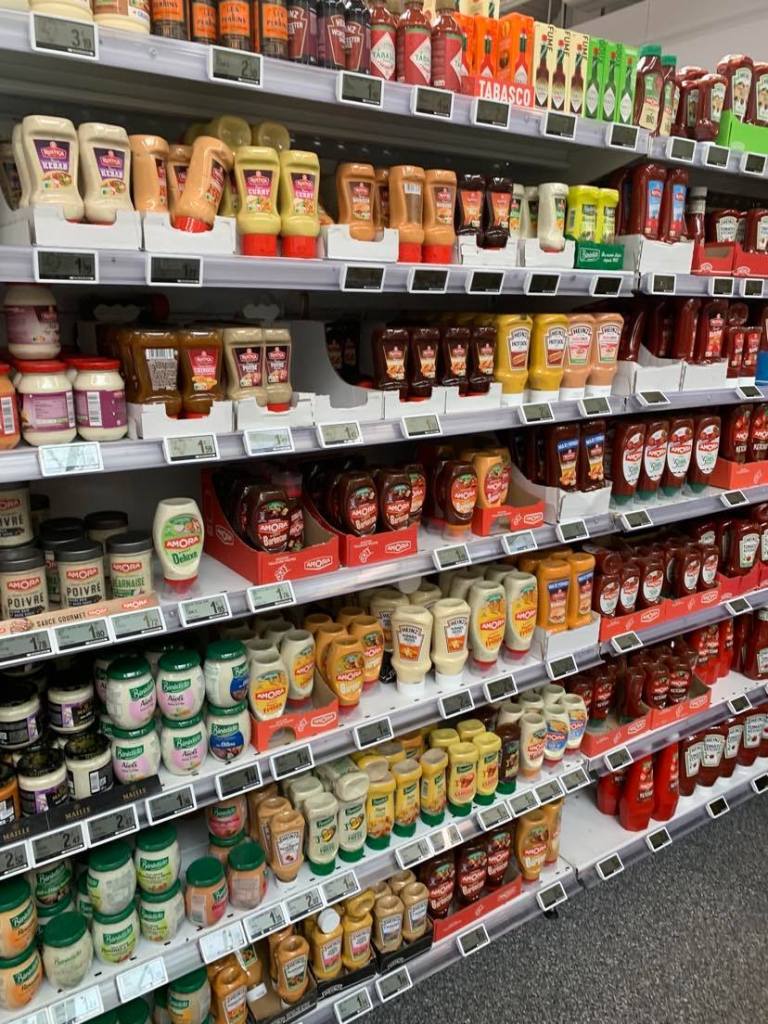

Shopping for alcohol
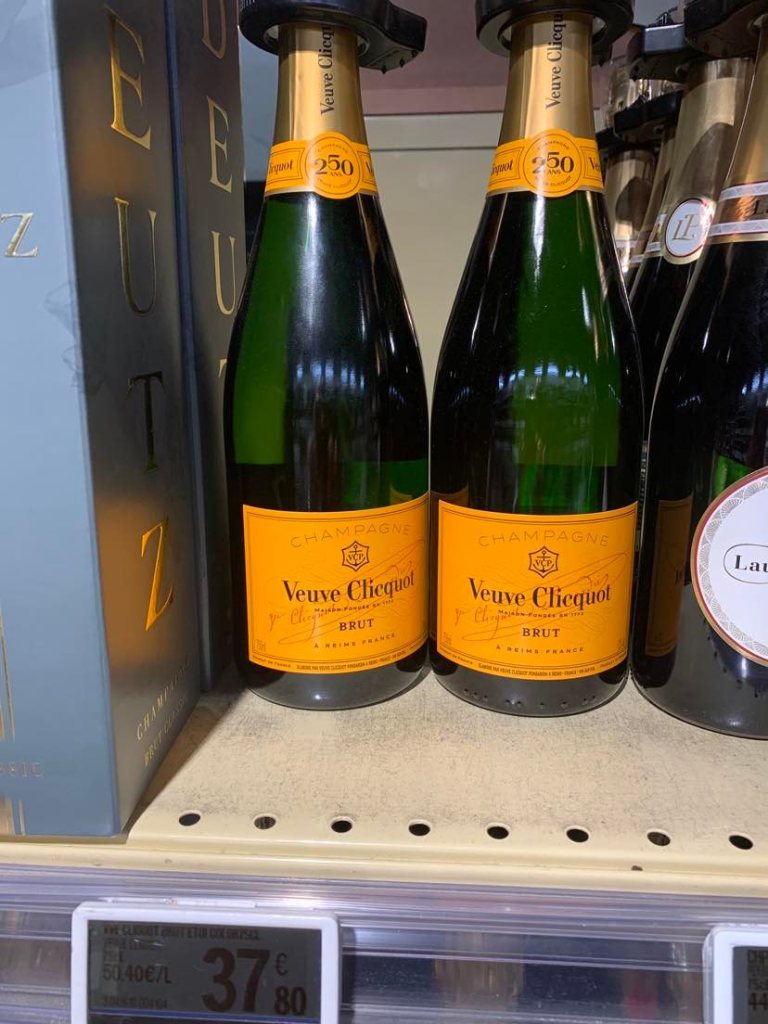
Last, but not least, one can buy wine and liquor in grocery stores here and it is so much more affordable–Veuve Clicquot champagne for 37 euros or a really wonderful 2016 Haut-Medoc for 8 euros. I will say our particular region of France does not sell a lot of white wine–mostly reds and the wines are sorted by region of France, not by type like they are in US. There is a very small international section of wines–though I don’t think I’ve seen anyone buy from it. The French have also put up signs with the recommended serving amounts of each type of liquor or wine–over serving is frowned upon here. Appropriate portions and restraint are a common theme.
Once we’ve filled up our cart, we unload our groceries onto the conveyer belt and place the divider between our order the person behind us–it is considered rude not to do that for the person behind you. The checkout clerks in France sit down while scanning groceries and everyone bags their own groceries. The whole experience is quite fascinating and although I am sure one day the huge selections and novelty of it all will get familiar and perhaps mundane, it is fun for now!
Moriah’s French Vinaigrette recipe:
Take a jar with a lid (like a mason jar) and put a tablespoon of dijon mustard in, add one diced shallot, a quarter teaspoon of sea salt and pepper. Then add a 1/3 cup of vinegar (I use apple cider vinegar). Place the lid on and shake vigorously. Then, after opening the jar, slowly add in 2/3 cup of olive oil (the best kind you can get). Then, screw the lid back on, and shake vigorously until combined. If you don’t have a jar with a lid, you can also use a whisk and a bowl. I like to dress my salad just before I serve–for me it is some cut leafy greens and a thinly sliced endive. After dressing, I shave some parmigiano romano on top and voila! Extra dressing can be stored in the refrigerator for up to a week. (I am proud that I have taught my sons how to make this and it is now what they prefer:)


 A Cariad Life
Leave a reply to John Moran Cancel reply